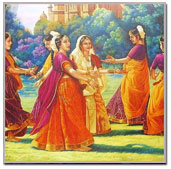


Rooted deep in Indian religious and cultural ethos - Teej plays a significant role in defining the true nature of relationship between a married couple. Besides, the festival provides much needed break to womenfolk from their daily household drudgery. Find out how Teej is significant in these and more ways to the women in India.
Religious significance of Teej festival lies in devotion of Goddess Parvati for her husband Lord Shiva. It was on this day that the divine couple Lord Shiva and Goddess Parvati reunited with each other after hundreds of years. Even today womenfolk commemorate this mythological event by observing 'Nirjara Vrat' for the well-being and long-life of their husband.
Teej celebrates the advent of monsoon season. Teej coincides with monsoon season and thus create a greater impact for its celebration. Taking full advantage of the beautiful climate at this time women enjoy themselves by swinging, singing and dancing in rain.
Break from Daily Humdrum of Life Teej celebration has great significance for womenfolk as it gives them their much needed break from the daily humdrum of life. For married women it also brings a chance to visit their parents house and relive childhood memories. No wonder, women celebrate the festival with great mirth and enthusiasm. They pay special attention to their appearance and deck themselves in beautiful clothes and fine jewelry. Women also apply intricate patterns of mehndi on their hands and feet.
One of the foremost significance of Teej is that it helps in strengthening relationship between married couples. Women who observe fast for the long life of their husband in earnest devotion feel closer and more committed to their husband. While watching their wife straining themselves, husbands feel more special. They reciprocate by being more loving and caring towards their wife. Husbands usually express themselves by presenting gifts to their wife and being more sensitive towards their doting wives.